Monthly visual observation
Watch a full open/close cycle from a safe distance. Notice new noise, shaking, crooked movement, or hesitation.
Garage door guide
Use a practical garage door maintenance checklist for visual inspection, cleanliness, hardware, rollers, seals, balance symptoms, opener controls, and safety sensors.
What to look for
Do not loosen springs, drums, lift cables, or bottom fixtures. Keep clear of a crooked, falling, or partially supported door.
Include the ZIP code, what the door is doing, recent sounds/events, and one or more clear photos when possible.
Watch a full open/close cycle from a safe distance. Notice new noise, shaking, crooked movement, or hesitation.
Remove debris around the opening and keep photo-eye lenses clean. Do not grease the track surface itself.
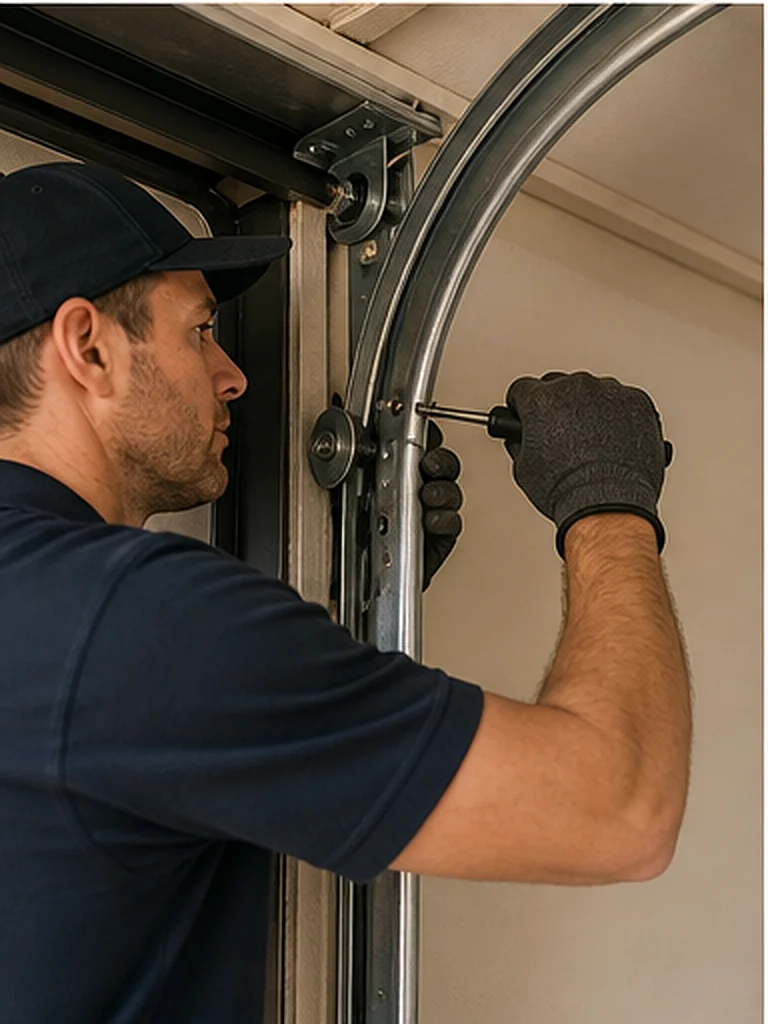
Look for frayed cables, cracked hinges, loose hardware, damaged rollers, worn seals, and panel damage without loosening tensioned components.
Springs, cable drums, bottom fixtures, and lift cables can remain under significant tension. Leave those adjustments to trained service providers.
Albuquerque context
Garage door problems in the Albuquerque area can be influenced by high sun exposure, dry dust, temperature swings, normal cycle wear, driveway/access conditions, and the age of the door or opener. Those conditions do not diagnose the problem by themselves, but they are useful context for a local quote request.
Frequently asked questions
If the door is crooked, off track, falling, unusually heavy, or has visible spring/cable damage, limit use and request professional evaluation.
Yes. A full-door photo plus close views of the problem area can make the initial conversation more useful.
No. The provider determines the repair scope, pricing, scheduling, and any warranty after evaluating the project.
Related pages
Request a local quote
Share the ZIP code, symptoms, and an optional photo. Quote requests are reviewed promptly and routed to a professional local provider. Physical service timing varies by provider and project.