Separate opener trouble from door trouble
A heavy, binding, or unbalanced door can make a good opener appear weak. The door should be tested manually before an opener is condemned. If it does not move smoothly by hand, the spring, track, roller, cable, or hinge problem needs attention first.
Common opener failures
Opener problems can involve power, travel limits, force settings, logic boards, capacitors, stripped drive gears, worn trolleys, broken belts, loose chains, remotes, keypads, wall controls, or safety sensors. Diagnostic steps differ by brand and model, so the label and model number are useful.
Repair or replace the opener
A newer opener with a single failed wear part may be worth repairing. Replacement becomes more practical when the unit is obsolete, lacks modern safety features, has multiple failing components, or parts are unavailable. The door size, weight, rail type, ceiling height, and desired features determine the right replacement.
Information to send before service
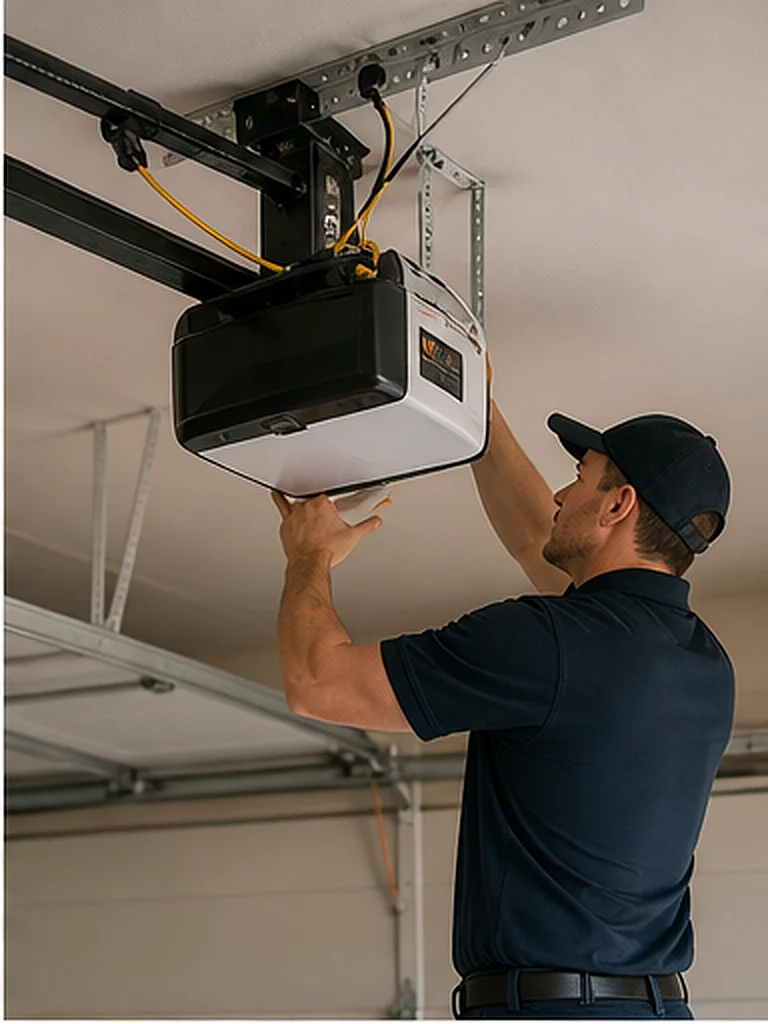
Photograph the opener label, the rail and trolley, the wall control, and any flashing diagnostic lights. Note whether the door moves manually and whether both remotes have the same problem. These details can quickly narrow the repair path.
Frequently asked questions
Opener Repair FAQ
Why does my opener hum but not move?
Possible causes include a jammed door, broken spring, failed capacitor, stripped gear, or disconnected trolley.
Why does the door reverse near the floor?
Sensor alignment, an obstruction, travel settings, force settings, or binding hardware can trigger reversal.
Do you repair remotes and keypads?
Remote, keypad, wall-control, programming, and compatibility problems can be evaluated as part of opener service.
Request service
Describe the problem and send a photo.
Use the quote form to share the ZIP code, symptoms, and an optional photo of the damaged area.