Torsion springs
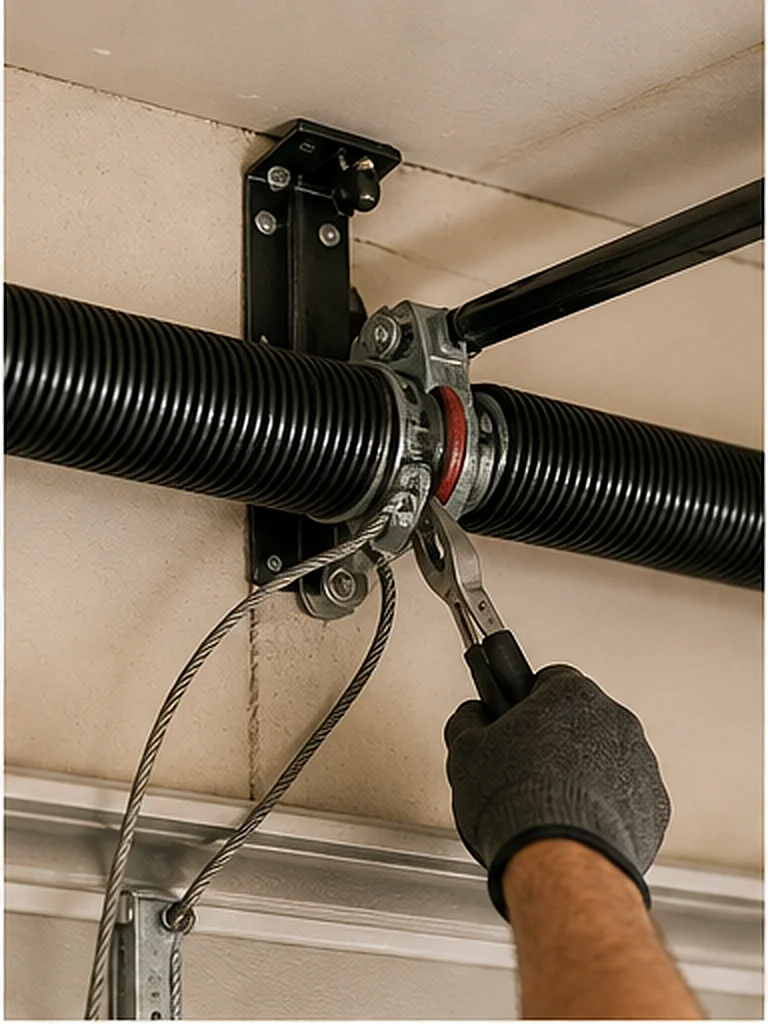
Usually mounted on a shaft above the door opening, torsion springs apply torque through drums and lift cables.
Garage door guide
Understand torsion and extension garage door spring systems, where they are located, how they counterbalance the door, and why replacement must match the door.
What to look for
Do not loosen springs, drums, lift cables, or bottom fixtures. Keep clear of a crooked, falling, or partially supported door.
Include the ZIP code, what the door is doing, recent sounds/events, and one or more clear photos when possible.
Usually mounted on a shaft above the door opening, torsion springs apply torque through drums and lift cables.
Often located along the horizontal tracks on some older/lighter systems, extension springs stretch as the door closes.
Door weight, height, drum geometry, spring dimensions, and cycle requirements all affect the correct spring selection.
Two springs that look similar can have different wire size or specifications. Correct balance matters more than appearance.
Albuquerque context
Garage door problems in the Albuquerque area can be influenced by high sun exposure, dry dust, temperature swings, normal cycle wear, driveway/access conditions, and the age of the door or opener. Those conditions do not diagnose the problem by themselves, but they are useful context for a local quote request.
Frequently asked questions
If the door is crooked, off track, falling, unusually heavy, or has visible spring/cable damage, limit use and request professional evaluation.
Yes. A full-door photo plus close views of the problem area can make the initial conversation more useful.
No. The provider determines the repair scope, pricing, scheduling, and any warranty after evaluating the project.
Related pages
Request a local quote
Share the ZIP code, symptoms, and an optional photo. Quote requests are reviewed promptly and routed to a professional local provider. Physical service timing varies by provider and project.