What a useful tune-up should cover
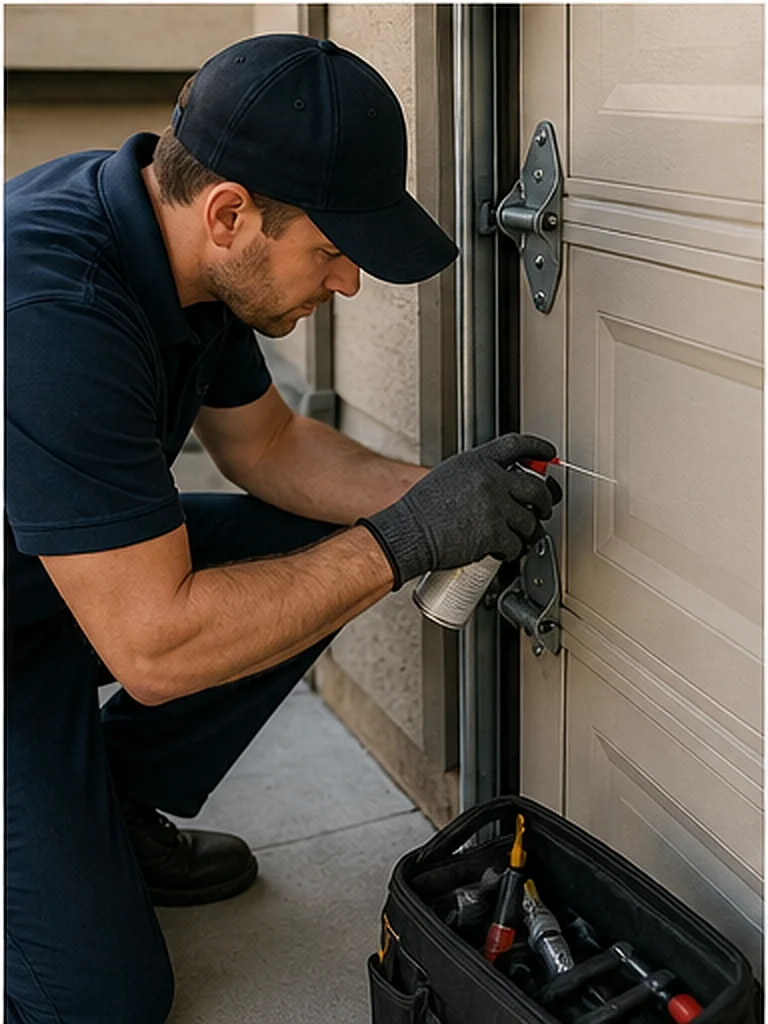
Maintenance should include a visual inspection of springs, cables, drums, rollers, hinges, tracks, bearings, brackets, fasteners, bottom fixtures, weather seal, opener rail, controls, and safety sensors. The door should also be tested manually for balance and binding.
Lubrication without creating a dust trap
Appropriate garage-door lubricant can be applied to hinges, bearings, roller bearings, and torsion springs where specified. Heavy grease on the track surface is not helpful because rollers should roll rather than slide, and excess residue collects Albuquerque dust.
Balance and opener protection
A properly balanced door reduces strain on the opener. If the door drops, rises, or feels heavy when disconnected, spring adjustment or repair may be required. Force settings should not be increased to overpower a binding door.
Maintenance cannot restore worn-out parts
Lubrication may quiet dry components, but it cannot repair a cracked roller, frayed cable, broken spring, bent track, torn hinge mount, or failing opener gear. Those items should be repaired rather than masked.
Frequently asked questions
Maintenance & Tune-Ups FAQ
How often should a garage door be maintained?
Usage and condition vary, but a periodic inspection and safety test is reasonable, especially when operation changes or the door becomes noisy.
Should garage door tracks be greased?
The track surface generally should be kept clean. Lubricate appropriate bearings and pivot points rather than coating the track with heavy grease.
What is a garage door balance test?
With the opener disconnected and the door controlled by hand, the door should move smoothly and remain reasonably stable instead of dropping or shooting upward.
Request service
Describe the problem and send a photo.
Use the quote form to share the ZIP code, symptoms, and an optional photo of the damaged area.