Match the sound to the movement
A noise that occurs at the same height every cycle may indicate a track, hinge, panel, or roller issue. Noise that continues while the door is stationary may come from the opener. A bang followed by a heavy door suggests a spring failure.
Common sources of garage door noise
Worn rollers, dry hinges, loose fasteners, bearing wear, chain slap, opener vibration, bent tracks, spring friction, rubbing weather seal, and cracked panels can all create noise. More than one source may be present on an older system.
Why simply adding lubricant may not work
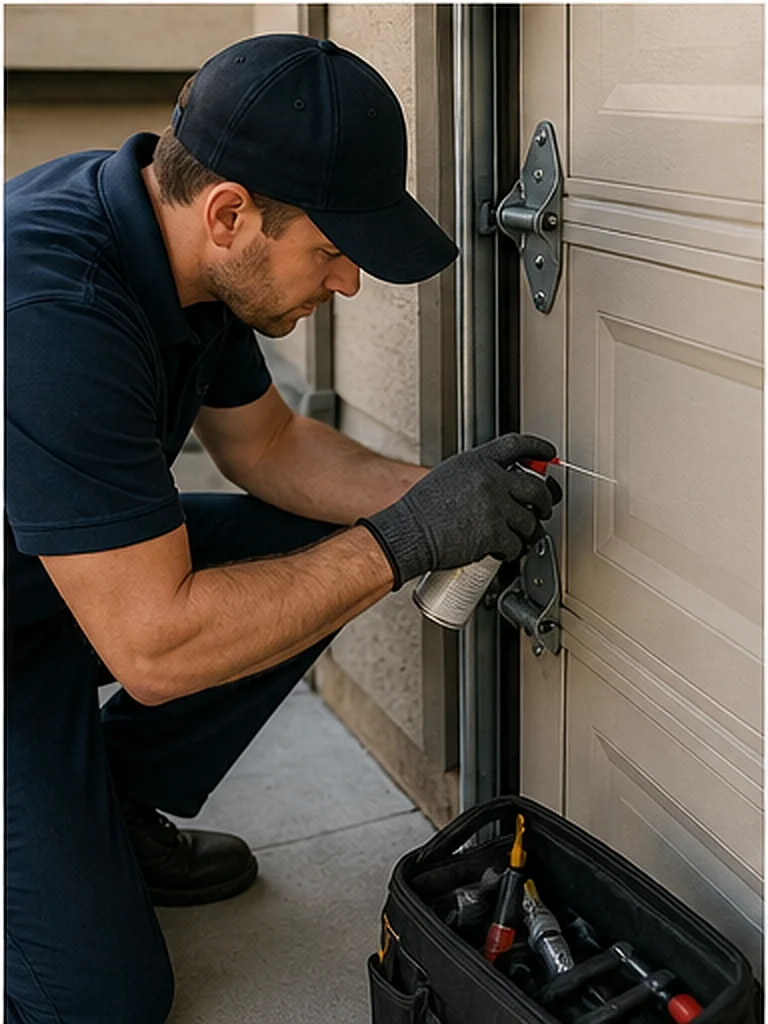
Lubrication helps dry moving parts but will not correct a seized roller, loose track, failed bearing, unbalanced door, or structural damage. Applying the wrong product can attract dust and make future service messier.
Quieting the entire system
A durable repair addresses the mechanical cause, tightens and aligns the hardware, verifies balance, and isolates opener vibration where appropriate. Roller type and opener drive style can influence the final noise level.
Frequently asked questions
Noisy Door Repair FAQ
Why does my garage door pop while opening?
Possible causes include spring movement, binding sections, loose hinges, track alignment, or a panel flexing under load.
Will lubrication stop garage door noise?
It can reduce noise from dry pivot points and bearings, but damaged or misaligned parts still need repair.
Why is the opener so loud inside the house?
Vibration can transfer through mounting brackets and framing. The drive system, rail, hardware, and door balance should all be checked.
Request service
Describe the problem and send a photo.
Use the quote form to share the ZIP code, symptoms, and an optional photo of the damaged area.