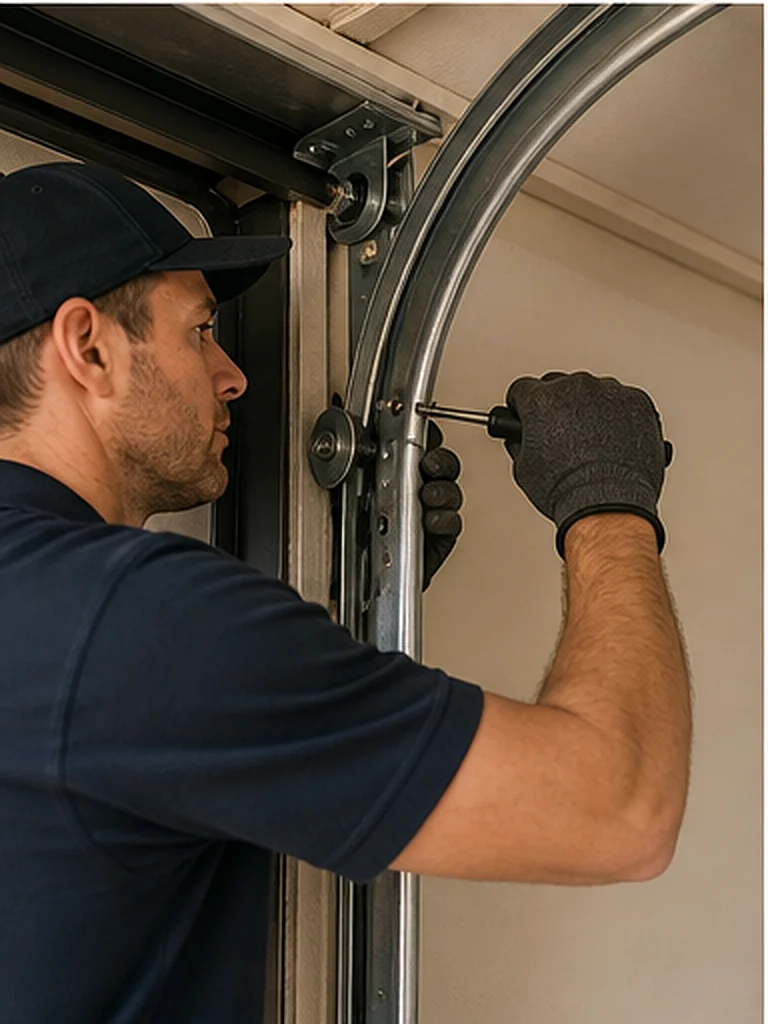
How rollers affect the whole door
Each roller guides a section through the vertical and horizontal tracks. When rollers do not turn freely, the opener and spring system must overcome extra resistance. That can increase noise, shake hardware loose, and accelerate wear on hinges and tracks.
Steel, nylon, and bearing rollers
Rollers differ in wheel material, diameter, stem length, and bearing design. Nylon rollers are often quieter, while quality bearing rollers can improve movement and longevity. The correct choice must fit the track and hinge geometry.
Why some rollers are not simple DIY replacements
Bottom rollers are connected to fixtures that also hold lift cables under spring tension. Those fixtures should not be loosened casually. Top and center rollers may be more accessible, but the door still needs to be secured and aligned.
Combine roller service with a hardware check
Replacing rollers is a good time to inspect hinges, track fasteners, bearings, spring balance, and opener force. New rollers will not correct a bent track or an unbalanced door by themselves.
Frequently asked questions
Roller Repair FAQ
How often do garage door rollers need replacement?
There is no fixed interval for every door. Condition, cycles, material, bearing quality, weight, dust, and maintenance all affect service life.
Will new rollers make the door quieter?
They often reduce rolling noise, but springs, hinges, bearings, opener vibration, and loose hardware may also contribute.
Can a bad roller make the door come off track?
Yes. A seized, broken, or badly worn roller can bind or escape the track, especially when other alignment problems exist.
Request service
Describe the problem and send a photo.
Use the quote form to share the ZIP code, symptoms, and an optional photo of the damaged area.