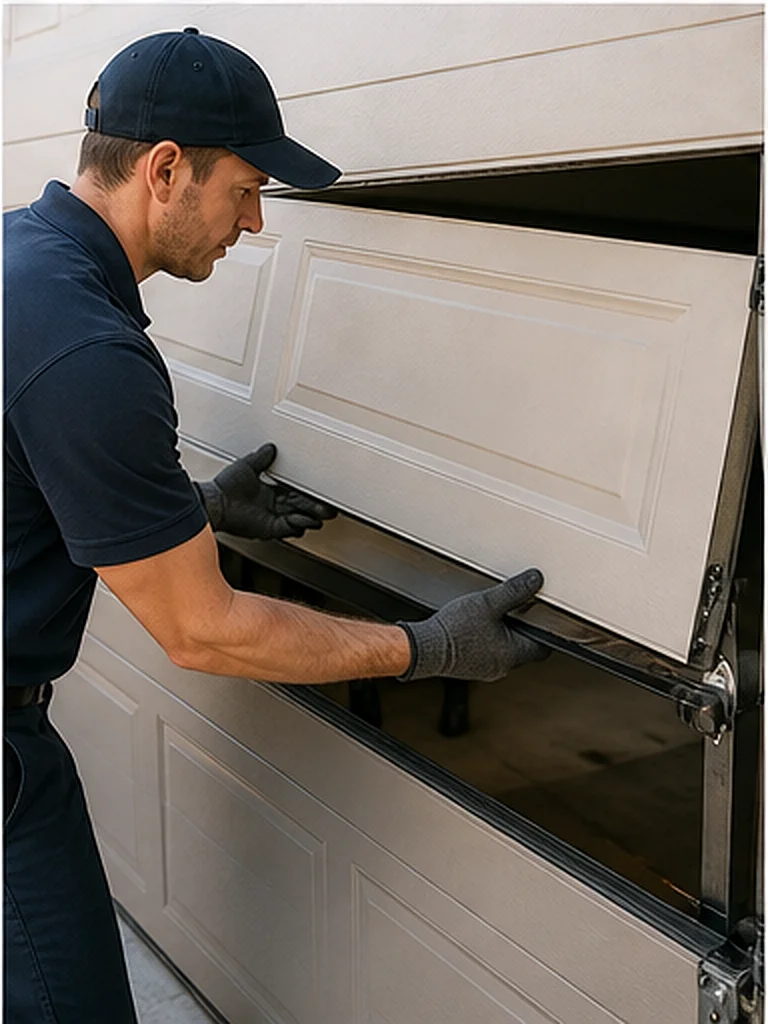
Cosmetic dent or structural damage
Small surface dents may not affect operation. A deep crease, split stile, torn hinge mount, folded top section, or damage near the roller carrier can weaken the door and create alignment problems. Structural damage should be addressed before continued use.
When one section can be replaced
A single section may be replaceable when the manufacturer, model, design, thickness, color, and dimensions can be matched. Availability becomes more difficult with discontinued doors, sun-faded finishes, custom overlays, and older panel profiles.
When full door replacement makes more sense
Replacement may be more practical when several sections are damaged, the door is badly rusted, insulation has failed, matching panels are unavailable, or the repair cost approaches the value of a new door. That decision should follow an inspection rather than an automatic sales recommendation.
Protecting the new or repaired section
Correct opener arm geometry, reinforcement struts, balanced springs, aligned tracks, and smooth rollers reduce stress on the sections. Impact protection and keeping objects clear of the door path help prevent repeat damage.
Frequently asked questions
Panel Repair FAQ
Can one garage door panel be replaced?
Often yes, provided a compatible section is still available and the rest of the door is structurally sound.
Can a dent be repaired without replacing the panel?
Some minor dents are cosmetic and may be improved, but creased or structurally damaged sections usually need reinforcement or replacement.
Why is the top panel bending?
Possible causes include poor opener-arm geometry, missing reinforcement, a heavy door, or a weakened panel.
Request service
Describe the problem and send a photo.
Use the quote form to share the ZIP code, symptoms, and an optional photo of the damaged area.