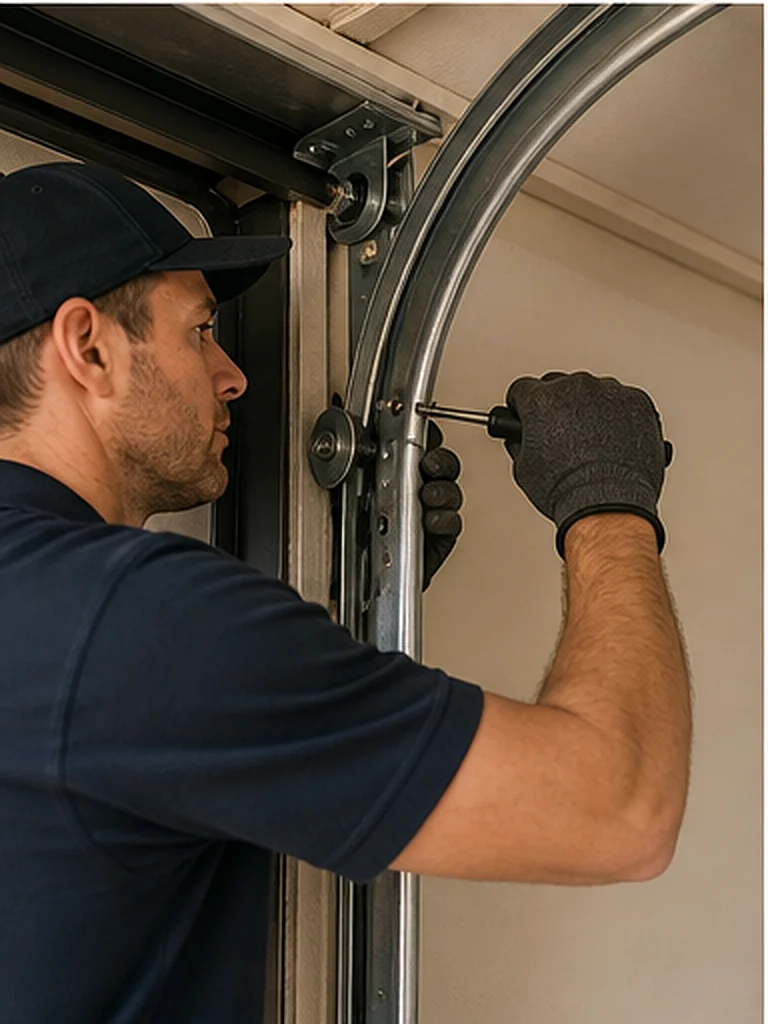
Why doors come off track
Common causes include impact damage, a cable jumping the drum, a broken spring, worn rollers, loose track brackets, bent track, a seized bearing, or operating the door after it begins binding. The visible escaped roller may be the result rather than the original failure.
Do not force an off-track door
Running the opener can pull the top section, bend the rail, strip opener parts, or cause the door to collapse. Pulling the emergency release can also be dangerous when the door is suspended or uneven. The system should be secured before tension or alignment is changed.
What the repair should include
A proper off-track repair checks cables, drums, springs, rollers, hinges, track spacing, vertical alignment, flag brackets, bearing plates, and opener travel. Damaged components should be corrected before the door is cycled repeatedly.
Preventing a repeat failure
Loose hardware, worn rollers, dry bearings, track movement, and poor balance should be corrected during the visit. A door that is simply pushed back into the track without addressing the cause is likely to fail again.
Frequently asked questions
Off-Track Repair FAQ
Can I push the roller back into the track?
Not safely when the door is crooked, under tension, or supported unevenly. The door should be secured and the cause identified first.
Why is one cable loose?
The door may be off level, a cable may have jumped the drum, or a spring or track problem may have changed the tension.
Should I disconnect the opener?
Do not pull the release while an unstable door is raised. Keep the opener off and wait for the door to be secured.
Request service
Describe the problem and send a photo.
Use the quote form to share the ZIP code, symptoms, and an optional photo of the damaged area.